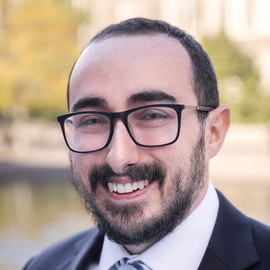
I am an Assistant Professor in the Department of Economics at Cornell University. My research interests are the industrial organization of health markets and econometrics.
I received my PhD in Economics from Princeton University in May 2024. My advisor was Kate Ho. Before starting graduate school, I received a BS in mathematics with a specialization in economics from the University of Chicago in 2017 and was a Stanford Law Empirical Research Fellow under John Donohue III between 2017 and 2018. After graduate school, I was a Postdoctoral Researcher at the Leonard Davis Institute of Health Economics at the University of Pennsylvania under Claudio Lucarelli.
PhD in Economics, 2024
Princeton University
MS in Economics, 2020
Princeton University
BS in Mathematics with a Specialization in Economics, 2017
University of Chicago
We propose semiparametric average treatment effect (ATE) bounds estimators with novel robustness properties: double sharpness and double validity.
A research note that under global weak overlap bounds, the optimal sup-norm rate does not have a polylog loss.
When contracts are formed at different times, the prevailing simultaneous-bargaining approach risks introducing bias, but explicitly modeling staggering introduces explosive state space growth. I show the step-by-step property implies a finite dependence-type cancellation of future states. I propose the Nash-in-Kalai model, which satisfies step-by-step in general, and which I show yields a tractable GMM framework. Applying the model to healthcare data, I find a static model produces biased, and sometimes incoherent, bargaining weights.
Nash weight bargaining weights are not identified in general; among bargaining solutions that satisfy IIA, only Kalai proportional bargaining weights are identified without knowledge of information timing. When contracts are multiperiod, bargaining weights may once again become unidentified, but identification can be restored under plausible conditions.
I quantify the impact of predictable increases in benchmark-linked prices between negotiations. There can be real effects in the presence of staggered contracting and time discounting. Using panel data on hospital–insurer contracts from West Virginia, I find both occur.
I show that even when the density of near-zero propensity scores may be unbounded, t-statistics based on a thresholded Augmented IPW estimator can remain well-calibrated. I characterize sufficient conditions in terms of black-box rates and minimal smoothness orders and use the conditions to propose rules of thumb for clipping or trimming rates.
I study auto-renew share of charges contracts, which are associated with small insurers paying high prices to American hospitals. I demonstrate that under certain conditions, these contracts can lead to Pareto improvements. The key feature of these contracts is the renewal process, which enables the insurers to discipline hospital charges with the threat of contract termination and renegotiation.
In-person: Spring 2022 (Preceptor)
In-person: Spring 2021
In-person: Fall 2014-Spring 2015 (Tutor)